

Got a Damp Locker Room?
Here’s What You Should Be Asking Your Locker Room Specialist
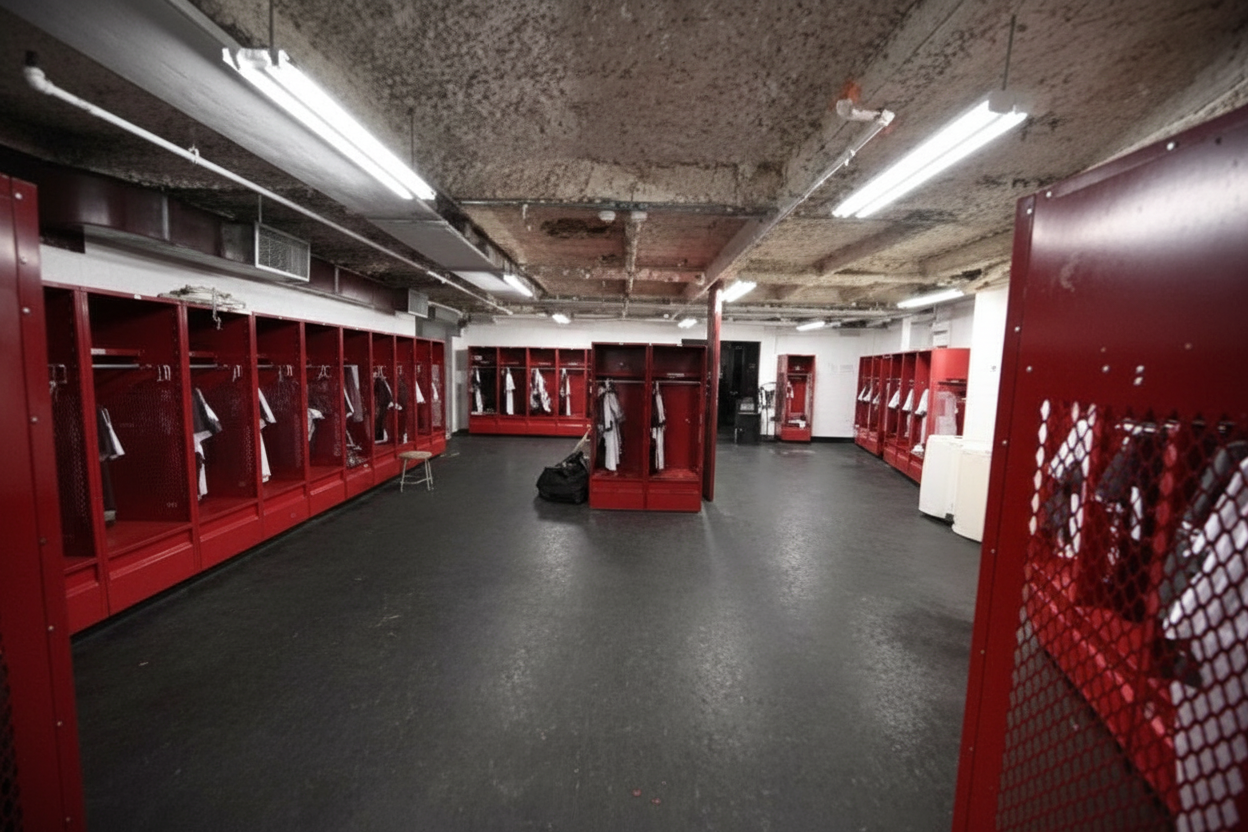
If your locker room smells musty, feels humid, or shows early signs of wear, you may be dealing with a moisture problem.
And here’s the reality: your athletes notice it long before you do.
Too often, schools and programs run into these issues because the wrong questions were asked at the start — or worse, not asked at all. The difference between lockers that last and lockers that fail usually comes down to whether you worked with a locker room specialist… or just someone who builds lockers.
At Legends Custom Lockers, we approach every project as a diagnostic first and a build second. Here are the questions a true locker room specialist should be asking before design ever begins.
1. What kind of environment are these lockers living in?
A locker room doesn’t exist in a vacuum. Before discussing finishes or layouts, your locker room specialist should understand the conditions of the space:
✔ Is the room below grade?
✔ Is it adjacent to pools, hydrotherapy areas, or training rooms?
✔ How consistent is the HVAC and airflow?
✔ Are there seasonal temperature swings that create condensation?
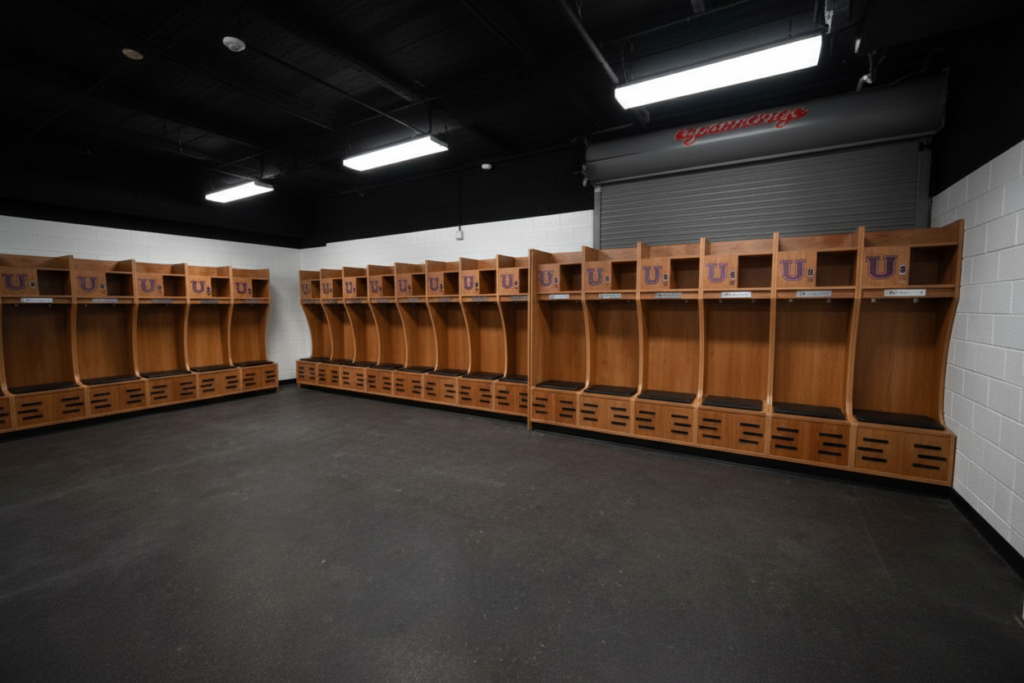
Moisture problems usually start with the room — not the lockers — and the design must respond to that reality.
ASHRAE’s guidance on ventilation for locker rooms highlights just how critical airflow is in these high-humidity environments — and your locker room specialist should be planning for it from day one.”
2. How will materials perform over time in this space?
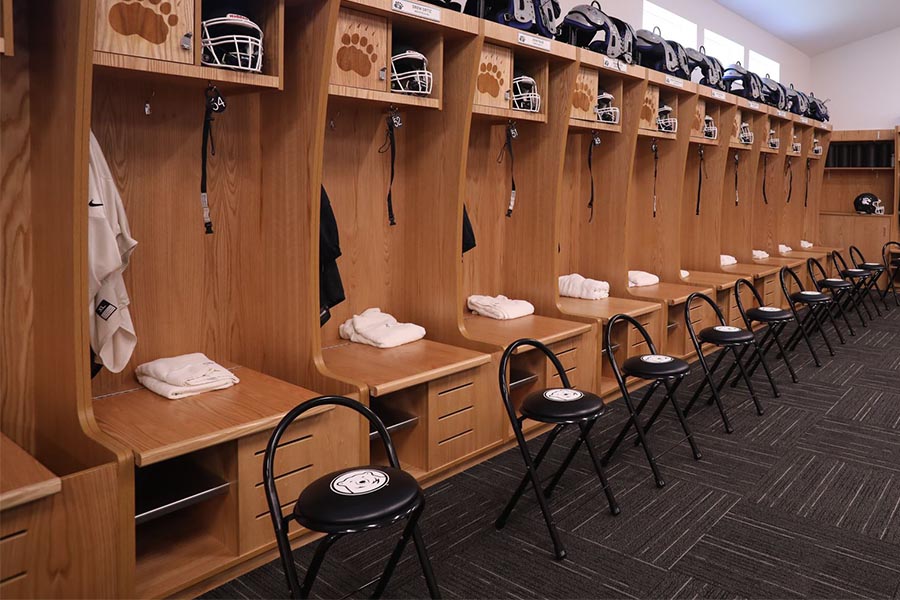
Some materials look great on day one and quietly fail over time when exposed to humidity. A locker room specialist should be thinking beyond appearance and asking how materials will:
✔ React to prolonged moisture exposure
✔ Hold up under daily athlete use
✔ Maintain structural integrity year after year
At Legends, material selection is never one-size-fits-all. Every space requires a different approach, and the right solution depends on the environment, usage, and expectations of the program.
If your locker room specialist isn’t asking about these factors, you’re likely being shown what’s easiest to sell — not what’s best to install.
3. How is airflow handled inside and around the lockers?
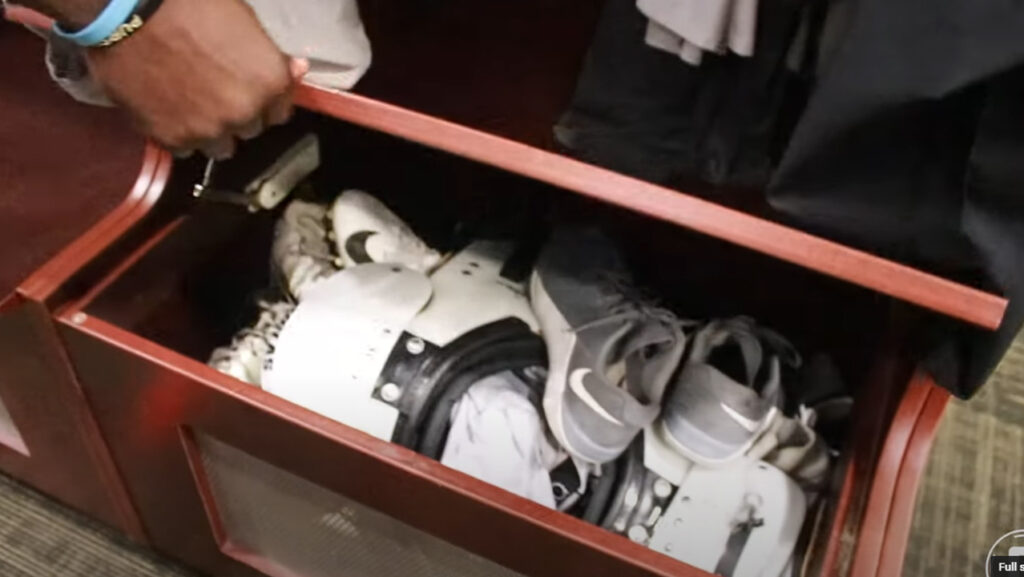
Humidity doesn’t just live in the air — it gets trapped inside lockers.
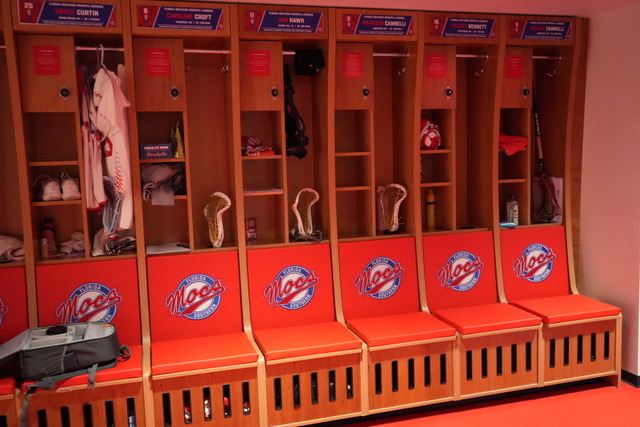
Wet gear, towels, and uniforms need somewhere to breathe. Without proper airflow, moisture builds up quickly, leading to odor, deterioration, and long-term damage.
A locker room specialist should be asking:
✔ What equipment is stored daily?
✔ How long does gear remain inside lockers?
✔ How often is the room cleaned and aired out?
Smart ventilation design — integrated discreetly into the locker system — can dramatically improve hygiene and extend the life of the lockers without sacrificing aesthetics.
4. How will these lockers age — and who stands behind them?
Moisture-related issues rarely show up immediately. They reveal themselves over time through warping, corrosion, and material breakdown.
That’s why a locker room specialist should plan for:
✔ Sealed edges and protected surfaces
✔ Hardware chosen for high-humidity environments
✔ Layouts that promote airflow and maintenance access
Just as important: they should still be there when questions come up. Locker rooms are long-term investments, and accountability matters.
Frequently Asked Questions
Lockers Aren’t Just Furniture — They’re Part of the Program
For athletic programs, locker rooms support performance, recruiting, and culture. Moisture problems don’t just damage lockers — they impact athlete experience and facility perception.
The right locker room specialist understands that their role goes beyond building boxes. It’s about designing systems that work in real-world athletic environments and hold up under pressure.
If you’re planning a new locker room or upgrading an existing one, start with the questions that matter. The answers will tell you everything you need to know about who you’re working with.
Want a second set of eyes on your locker room?
We’ll help you map out what’s possible — and where to start.
We’re happy to walk through your space, ask the right questions, and help you determine the best path forward — no pressure, no guesswork.